In a world where kids and teens crave immersive and physical experiences, the indoor entertainment industry must constantly evolve. One of the most exciting innovations gaining global momentum is the multi-level rope course — and Space Zoom is leading the charge.
🚀 What is Space Zoom?
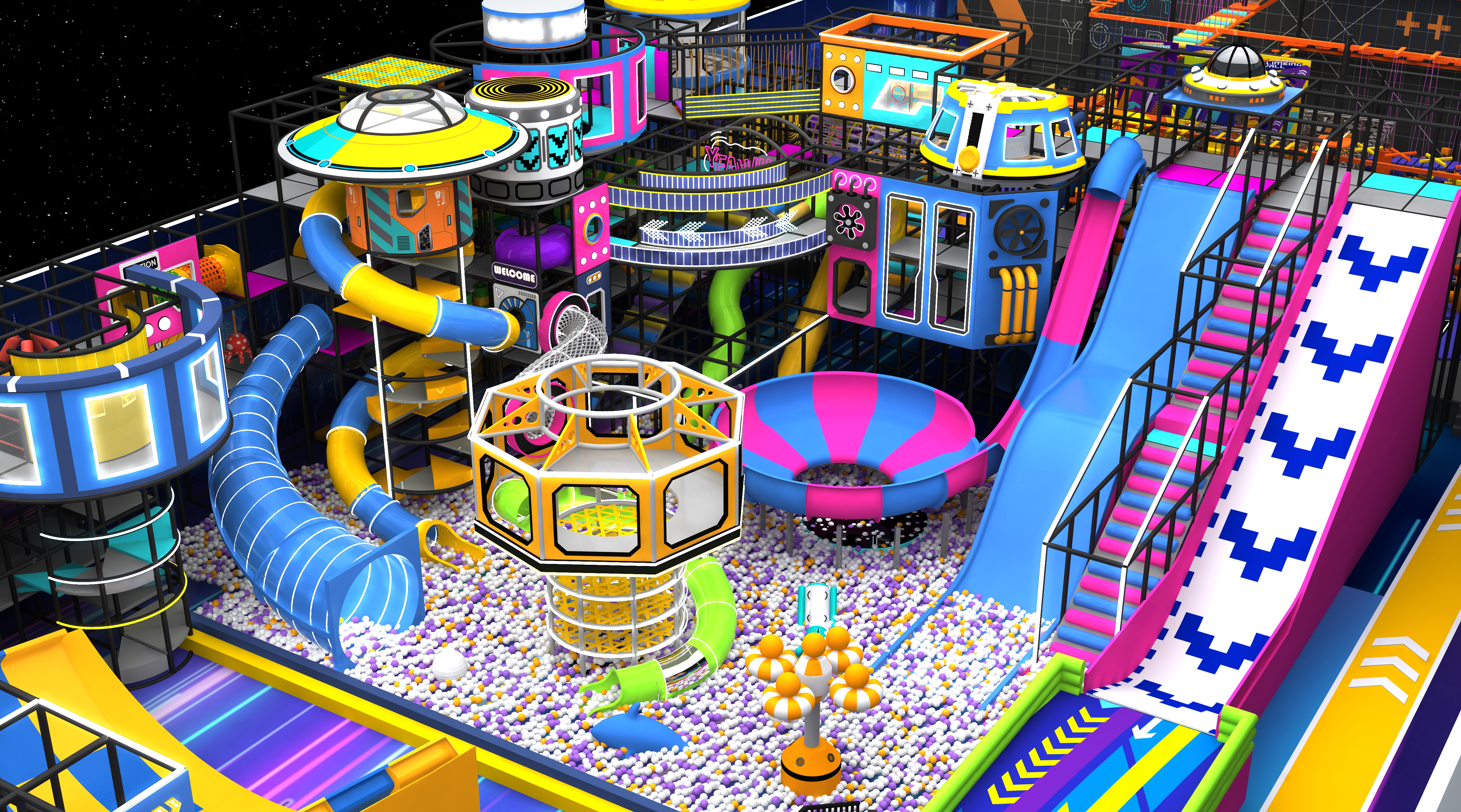
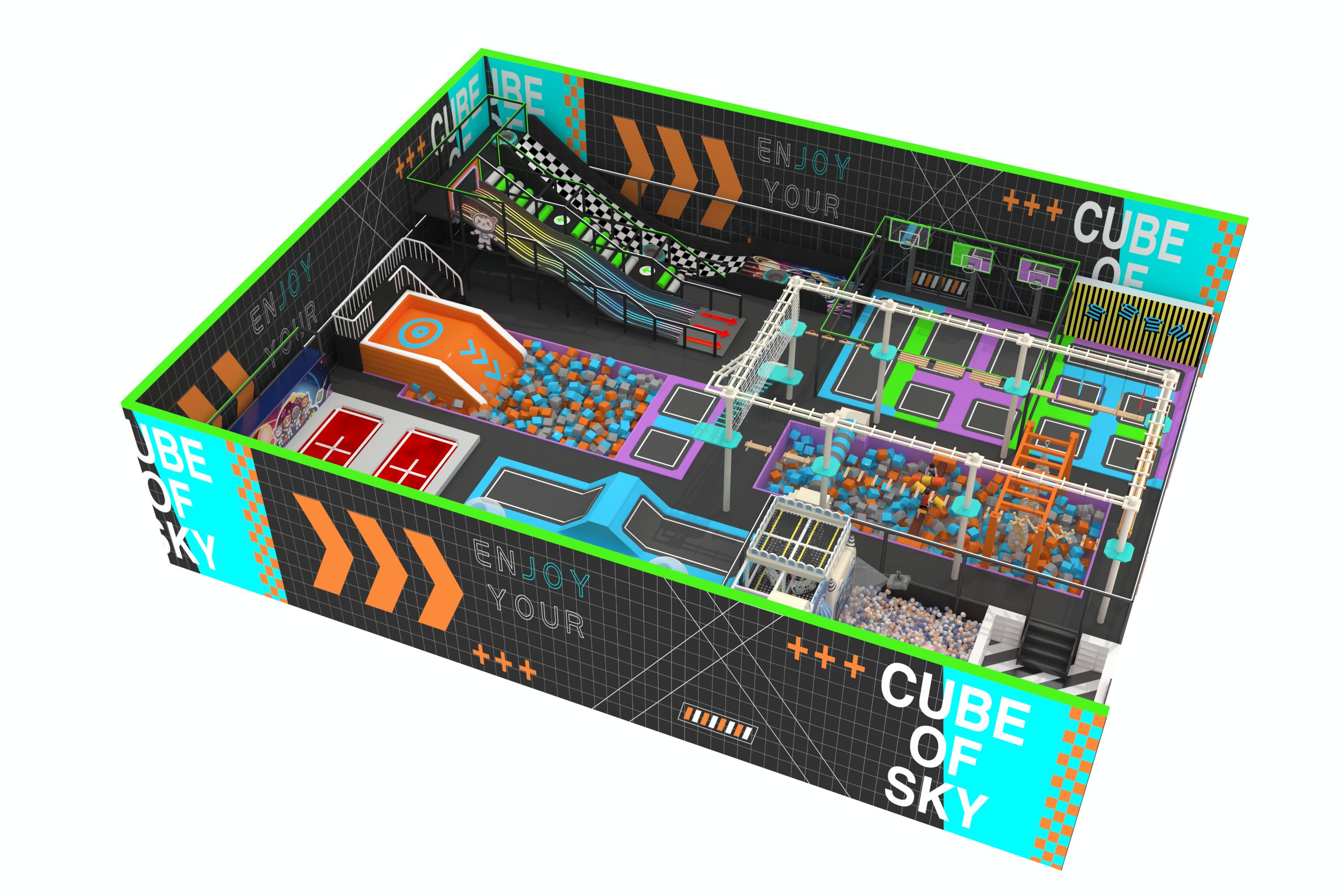
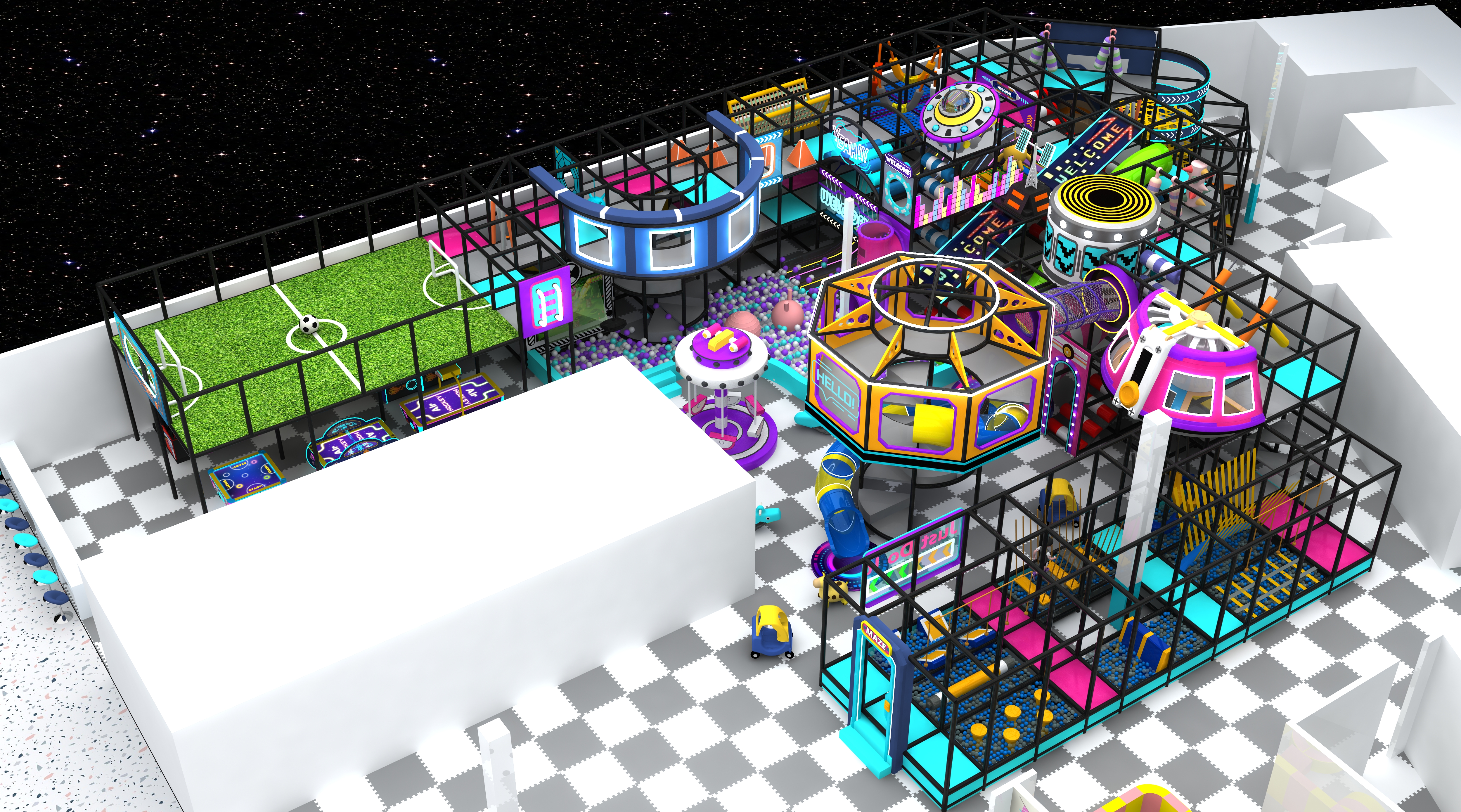
Space Zoom is a bold, space-themed indoor rope course that brings the thrill of aerial adventure into a safe, compact structure designed for modern amusement centers. From suspended bridges and balance beams to rope tunnels and climbing nets, Space Zoom turns physical play into a gravity-defying adventure.
Whether installed in a trampoline park, shopping mall, family entertainment center, or even a school gymnasium, this system is a magnet for families seeking memorable, screen-free fun.
🌟 Key Benefits of the Space Zoom Rope Course:
1. Multi-Level Challenges for All Ages
With upper and lower levels filled with swinging steps, vertical climbs, and high-wire bridges, Space Zoom keeps adrenaline pumping for kids, teens, and even adults.
2. Space-Themed Aesthetic = Visual Attraction
Designed with vibrant blues, oranges, and cosmic-themed signage, Space Zoom isn’t just an activity — it’s a photogenic centerpiece that draws crowds.
3. Safe Yet Thrilling
Each unit is built with galvanized steel, anti-slip platforms, and a high-quality harness and belay system that allows for safe free movement throughout the course.
4. Customizable Design
Want to match your park’s theme? Adjust obstacle difficulty? Fit it to your floorplan? No problem. The indoor modular design means Space Zoom is made to fit your vision.
🎯 Why Add a Rope Course to Your Facility?
Modern families are seeking experiential activities that engage the body and mind. An indoor rope course:
Encourages physical fitness and confidence
Promotes teamwork and resilience
Boosts social media sharing with visually stunning design
Keeps visitors staying longer — and returning
Incorporating a structure like Space Zoom gives your venue a competitive edge, expanding your age range appeal and increasing foot traffic.
🔧 Installation & Support
Space Zoom is manufactured by a professional amusement equipment factory with international experience. Each system comes with installation guidance, safety certifications, and customization options.
Ready to elevate your indoor play center? Explore Space Zoom — the future of indoor rope adventure.
📩 Contact us to learn how you can bring Space Zoom to your city.
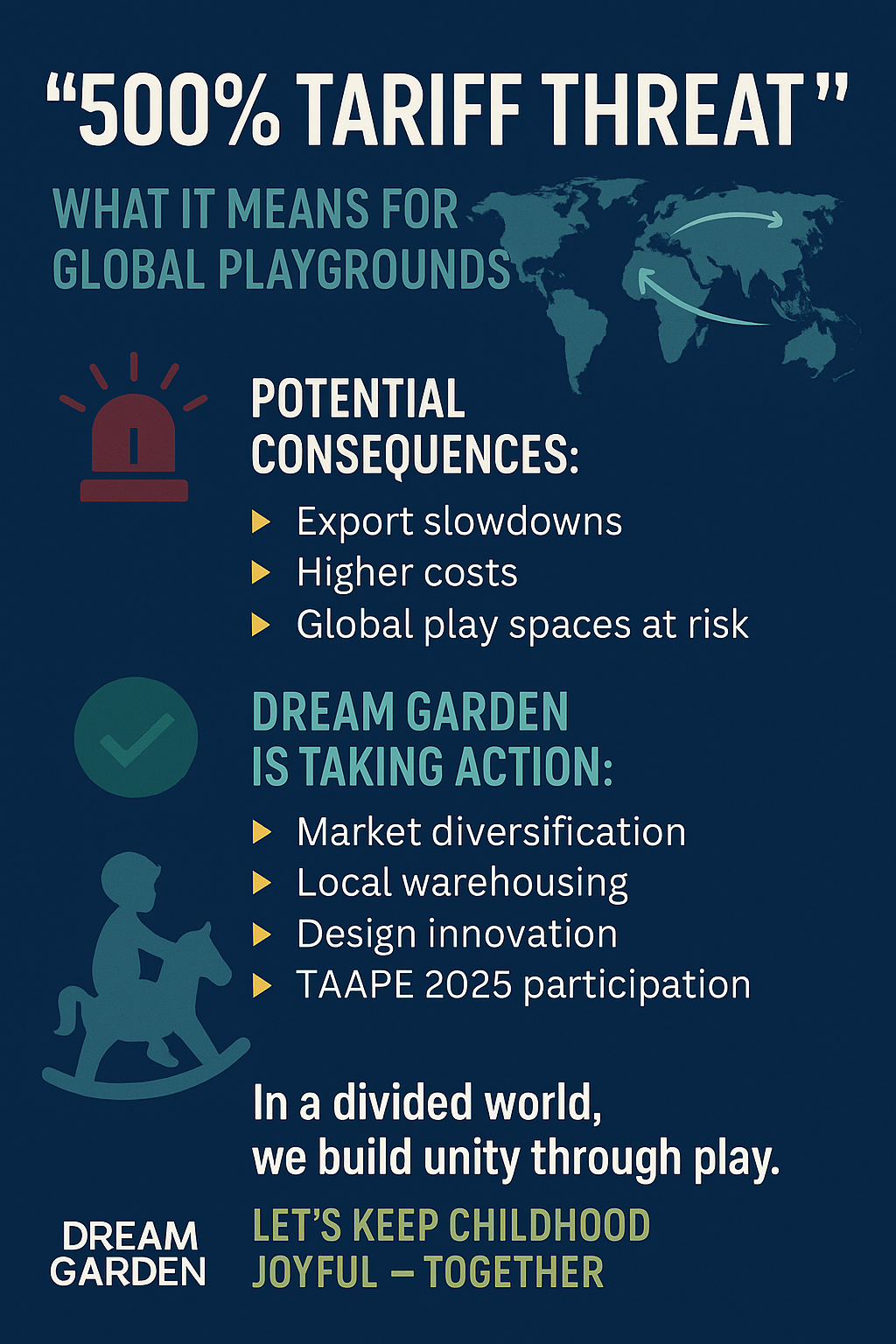
As U.S.-China trade tensions intensify, particularly with the recent threat of up to 500% tariffs on countries trading with Russia, global industries are bracing for impact — including an unlikely but significant sector: indoor playground equipment manufacturing.
On July 14th, U.S. officials escalated their rhetoric, suggesting “secondary tariffs” targeting countries — like China — that continue purchasing Russian energy. While the focus appears to be on oil and gas, the strategic and punitive nature of such tariffs could extend beyond raw materials, impacting export-dependent sectors.
🌏 China’s Indoor Playground Industry: A Global Leader at Risk?
Over the last two decades, China has become the world’s leading exporter of commercial indoor playground equipment, soft play areas, trampoline parks, and family entertainment center (FEC) solutions. Brands like Dream Garden supply to over 40 countries, including markets in Europe, Latin America, Southeast Asia, and North America.
These manufacturers offer:
Turnkey solutions (design → production → installation)
ASTM, TUV, SGS-certified products
Custom-themed indoor play structures
Competitive pricing and advanced engineering
However, with rising geopolitical tensions, Chinese manufacturers are increasingly exposed to political risk beyond logistics and costs.
🚨 What If 500% Tariffs Become Real?
If the U.S. or allied countries begin enforcing secondary sanctions or extra tariffs on Chinese companies under the pretext of Russian trade links, the indoor amusement industry could face:
⛔ Disrupted export channels
💸 Higher costs for U.S. importers
🚢 Longer delivery times due to rerouting
🔍 Increased scrutiny on suppliers’ origin of raw materials
This would hurt not only Chinese manufacturers, but also global developers and indoor FEC investors who rely on cost-effective, safety-compliant playground systems from China.
🎯 How China’s Playground Equipment Industry Is Responding
Diversifying Markets: Many Chinese companies have been pivoting towards ASEAN, the Middle East, Africa, and Latin America, where demand for affordable, high-quality indoor play systems is growing — and trade relations are more stable.
Building Local Warehouses: To reduce tariff exposure, companies are establishing local warehouses and installation teams abroad, especially in the EU and MENA regions.
Highlighting Value Beyond Cost: Chinese brands are focusing more on design innovation, theme customization, and green manufacturing to distinguish themselves from lower-quality competitors.
Leveraging Trade Shows (e.g., TAAPE 2025): Many manufacturers will showcase at events like TAAPE 2025 in Bangkok, promoting deeper ties with ASEAN buyers and reducing reliance on Western markets.
💡 Final Thought: Will Tariffs Undermine Global Access to Play?
Tariff wars rarely produce winners — especially when they spill into non-strategic consumer industries like children’s recreation. As the world recovers from the pandemic, affordable and accessible play environments are essential to support childhood development, family wellbeing, and community spaces.
If tariffs block that progress, everyone pays the price — not just manufacturers.
👋 We are Dream Garden, a professional indoor playground equipment factory based in China. With over 15 years of global experience, we remain committed to safe, creative, and cost-effective family entertainment solutions worldwide.
Saudi Arabia is undergoing a major transformation in its entertainment and tourism landscape, driven by #Vision2030. One of the most ambitious projects under this vision is Qiddiya – a giga-project near Riyadh that aims to become the capital of entertainment in the Kingdom and the broader Middle East.
🎯 What is Qiddiya?
Located southwest of Riyadh, Qiddiya spans over 376 square kilometers and is being developed as a fully integrated entertainment, sports, and cultural city. The project will host:
The region’s largest Six Flags theme park
A world-class waterpark (Aquarabia)
Motorsports tracks
Interactive museums, live shows, and resorts
With over 12 planned amusement zones and more than 275 attractions, Qiddiya is expected to attract 17 million+ visitors annually by 2030 — opening massive opportunities for global equipment suppliers.
🌍 Why It Matters for Chinese Indoor Playground Manufacturers
China’s Indoor amusement equipment industry has matured rapidly over the past decade, with companies like Dream Garden leading in innovation, affordability, and custom design. Qiddiya offers a strategic platform for Chinese manufacturers to:
📦 Offer turnkey solutions with design, production, and installation
🏗 Collaborate with international architects and developers
📈 Enter a fast-growing market with high purchasing power and government backing
💡 Competitive Advantages of Chinese Suppliers
✅ Strong cost-performance ratio
✅ Rich experience with international certifications (TUV, ASTM, EN1176)
✅ Ability to customize designs for cultural and safety compliance
✅ Rapid production & shipping from established supply chains
⚠️ Challenges to Consider
High standards for safety and compliance
Cultural adaptations (family zones, modest themes)
On-ground after-sales support
Need to build trust in a competitive market
Chinese companies are advised to work with local Saudi partners, participate in events like Saudi Entertainment Expo, and establish service points or showrooms in Riyadh to boost visibility and service reliability.
🔚 Final Thoughts
Qiddiya is more than just a project — it’s a gateway to the entire Gulf entertainment market. For Chinese brands, it offers a once-in-a-decade opportunity to build presence, gain credibility, and secure long-term growth in the Middle East.
📩 If you’re a supplier, investor, or potential partner looking to enter the Saudi amusement market, now is the time to act.
💬 What do you think? Can Chinese equipment brands make a breakthrough in Qiddiya? Leave a comment below, follow us for more updates, or get in touch to explore collaboration opportunities.
Installing indoor playground equipment might seem challenging at first, but by following these clear, practical steps, you’ll set up a safe, appealing, and fully-functional play area.
🛠️ Step 1: Site Preparation
Ensure the selected location meets safety regulations (EN1176, EN71).
Clean and clear the space thoroughly.
Check the floor surface—it should be flat, dry, and stable.
📦 Step 2: Receive and Inspect Equipment
Confirm all ordered indoor playground equipment arrived according to the packing list.
Inspect items carefully for any damage during transit.
Organize components clearly by sections or structures.
📏 Step 3: Layout Planning
Review your playground design drawing provided by manufacturers like Dream Garden.
Mark out the layout on your floor clearly using tape or chalk.
🔩 Step 4: Assemble the Main Frame
Start with the metal or wooden structure, assembling the frame first.
Use provided connectors, screws, bolts, and follow the manufacturer’s instructions closely.
Periodically check for stability and alignment with a spirit level.
🧸 Step 5: Install Soft Play Apparatus
Begin attaching foam padding and protective coverings onto frames.
Install soft play equipment components—slides, tunnels, climbing walls—securing each tightly.
Ensure no sharp edges or exposed bolts remain.
🪜 Step 6: Fix Safety Netting & Barriers
Install safety nets or mesh to secure elevated structures.
Confirm that nets are tightly stretched without gaps that could entrap children.
🛡️ Step 7: Final Safety Inspection
Thoroughly check every installed element—especially moving parts, connections, slides, and climbing apparatus.
Verify equipment complies with international standards (CE, EN1176, EN71).
🧽 Step 8: Cleaning & Sanitation
Clean all surfaces and sanitize thoroughly with child-safe disinfectants.
Remove all installation debris, ensuring the space is tidy and safe.
🎯 Step 9: Testing and Commissioning
Test each component by simulating regular use (e.g., climbing, sliding, jumping).
Correct any loose connections or installation issues immediately.
📝 Step 10: Documentation & Maintenance Guide
Keep the installation manual, certificates, and warranty documents handy.
Develop a regular maintenance and safety inspection schedule.
🎈 Step 11: Grand Opening
Plan an inviting grand opening event.
Use social media to market the launch, showcasing your new indoor playground.
🛎️ Installation Tips:
Follow Manufacturer’s Instructions: Reliable manufacturers like Dream Garden provide clear, detailed installation manuals.
Professional Assistance: If unsure, always seek professional installation help.
🚧 Safety First:
Always prioritize safety over speed or cost. Compliance with international safety standards is critical for your indoor playground’s success and longevity.
As Saudi Arabia continues its ambitious push to diversify its economy under Vision 2030, the entertainment and leisure sector is rapidly emerging as one of the most vibrant growth engines in the region. Events like the Saudi Entertainment and Amusement Expo 2025, held in Riyadh Front Expo from May 20–22, reflect this momentum — with over 12,000 registrants expected, the demand for family-oriented amusement solutions has never been greater.
At Dream Garden, a global manufacturer of indoor playground equipment, we see Saudi Arabia not just as a market — but as a long-term partner in the region’s transformation. With over 15 years of experience supplying modular, safe, and customizable soft play solutions to over 30 countries, we are excited to bring our expertise to Riyadh and beyond.
Why Dream Garden is Investing in the Saudi Market
✅ Family-Centric Entertainment Demand Is Soaring
From shopping mall developments to family entertainment centers (FECs), the Kingdom is prioritizing indoor recreation spaces that serve both children and families. Our indoor playground sets — including soft play zones, interactive climbing structures, and sensory play areas — are ideally suited for these venues.
✅ Compliance with International Standards (CE EN1176 / EN71)
We understand that safety is paramount. Dream Garden products meet European CE safety standards, making them suitable for premium indoor projects within malls, schools, and play cafes across Saudi Arabia.
✅ Customized for Saudi Climate and Business Models
Our equipment is modular, easy to clean, and transport-friendly — ideal for mobile installations or facilities requiring frequent layout adjustments. Additionally, we offer sand- and dust-resistant materials for long-term durability in the local climate.
✅ Support for Franchise Development and Local Operators
We work with both single-location startups and large-scale entertainment groups looking to develop franchises or themed indoor parks. Dream Garden offers design-to-installation support, along with marketing visuals, business plans, and logistics to Saudi ports like Jeddah or Dammam.
Join the Movement: Be Part of Saudi’s Indoor Play Revolution
The Saudi Entertainment and Amusement Expo 2025 represents a prime opportunity to explore partnerships, source suppliers, and plan future projects. If you are attending, now is the perfect time to explore high-quality indoor playground equipment that aligns with Saudi Arabia’s bold entertainment vision.
Whether you’re a property developer, amusement center operator, or investor in KSA’s leisure sector — Dream Garden is ready to help you build a better play space for Saudi families.
As demand rises in Israel for safe, mobile soft play zones at private events like birthday parties, family gatherings, and community celebrations, Dream Garden is proud to offer a tailored solution: modular, CE-certified indoor playground equipment built for portability, frequent assembly, and hassle-free transport.
At Dream Garden, we specialize in manufacturing high-quality soft play equipment that meets the needs of party rental businesses, event organizers, and indoor play operators worldwide. Our modular designs make it easy to set up vibrant play zones in any venue — whether it’s a hotel hall, community center, or backyard.
Why Choose Dream Garden for Mobile Soft Play Rentals?
✅ Modular and Easy to Assemble
All components are designed for quick installation and disassembly, making them ideal for businesses offering event-based rentals.
✅ CE-Certified to EN1176 / EN71 Standards
Every product is manufactured in compliance with European safety regulations and comes with official English-language CE certificates — fully recognized by Israeli customs and import authorities.
✅ Durable for Frequent Use
We use high-density foam, reinforced vinyl, and precision stitching to ensure our equipment withstands repeated transport, cleaning, and heavy use without compromising safety or appearance.
✅ Transport-Friendly Add-ons Available
To simplify your logistics, we also offer:
Foldable floor mats
Lightweight safety barriers
Custom storage bags or wheeled trolleys
Branding options for event planners or rental companies
With over 15 years of global experience and clients in 30+ countries, Dream Garden is a trusted partner for those building the next generation of event-based indoor play experiences.
If you’re looking to expand your business with high-quality indoor playground equipment that delivers safety, mobility, and visual appeal, Dream Garden has the solution — ready for shipment to Israel and fully compliant with local regulations.
Overview of Warranty:Dream Garden commits to its products being free from defects in materials and/or workmanship under normal use and installation for a period of 1 year from the date of shipment to the original purchaser. If a warranty issue arises within the first 12 months, we will replace the defective components at no cost.
Detailed Warranty Information:
1.Ten-Year Limited Warranty on Upright Posts & Wooden Parts: We offer a 5-year warranty for metal upright posts, covering structural failures due to material or workmanship defects.
2.Five-Year Limited Warranty on Metal Parts: Includes metal decks, steps, stairs, rails, etc., with a 5-year warranty from the date of shipment.
3.Five-Year Limited Warranty on Ground-Mount Metal Parts: Covers metal footers, in-ground footers, etc., for a period of 5 years from the shipment date.
4.Three-Year Limited Warranty on Plastic Parts: Covers slides, climbers, etc., for 3 years from the date of shipment.
5.One-Year Limited Warranty on Hardware and Other Components: Includes HDPE climbers, metal parts of spring riders, etc., with a 1-year warranty from the date of shipment.
6.Five-Year Limited Warranty on Site Furnishings: Covers the finish of thermoplastic coated site furnishings for five years from the date of shipment.
Exclusions: This warranty does not cover damages caused by man-made or natural disasters, vandalism, negligence, improper installation or use, alterations, normal wear and tear, or damages incurred during public or private use.
Claims and Limitations: Claims are limited to equipment replacement only and do not include labor, removal, or installation costs. Warranties are valid only if products are installed and maintained according to Dream Garden’s installation instructions and are applicable only to the original owner.
Claim Procedure: For warranty claims, please contact our customer service team via:
Phone: +86-13868643987We promise to arrange for the replacement of damaged products within 5 days of receiving a warranty claim and will cover freight costs globally.
Multilingual Support and Customer Feedback: We provide warranty terms in multiple languages and welcome customer feedback on our services. We will regularly review and adjust our warranty terms based on customer feedback and market changes.
State-Specific Rights: Warranty limitations and exclusions may vary by state, so please check the specific warranty rights in your state.
In recent years, trade tensions between China and the U.S. have led to significant tariff increases on Chinese goods, including indoor playground equipment. These tariffs have raised costs, impacted demand, and altered the competitive landscape. For Chinese indoor playground equipment suppliers like Dream Garden, it is crucial to understand the real impact of these tariffs and adopt effective strategies to mitigate losses while maintaining a competitive edge.
In this article, we will analyze how U.S. tariffs affect the cost, market demand, and competition for indoor playground equipment and suggest practical business strategies to navigate these challenges.
1. Background: U.S. Tariff Increases & Policy Changes
Since 2018, the U.S. has imposed Section 301 tariffs on Chinese imports, targeting products across multiple industries. Currently, tariffs remain at 7.5% to 25%, covering machinery, toys, and entertainment products, which directly impact indoor playground equipment.
Despite changes in U.S. administrations, these tariffs have not been lifted and continue to influence Chinese exports. Given this long-term tariff environment, businesses must take proactive steps to manage costs and explore alternative solutions to sustain growth in the U.S. market.
2. Cost Impact: How Tariffs Affect Pricing & Profitability
A 25% tariff directly increases the landed cost of imported indoor playground equipment, making products significantly more expensive for U.S. customers.
Who Bears the Cost?
If the supplier absorbs the cost → Profits decrease, limiting reinvestment in innovation and marketing.
If the U.S. buyer absorbs the cost → Final retail prices rise, reducing demand and leading to lost sales.
If both share the cost → Both sides suffer reduced profitability.
For example, if a piece of indoor playground equipment costs $50,000, a 25% tariff increases the price by $12,500. If the supplier tries to keep the total cost stable by lowering the product price, profit margins will shrink.
To counteract this, Dream Garden employs cost optimization strategies such as reducing material waste, improving logistics efficiency, and leveraging bulk shipping discounts to help maintain price competitiveness.
3. Market Demand: How Tariffs Influence Buying Behavior
High tariffs impact market demand in two major ways:
U.S. buyers become hesitant – Higher costs make playground owners and distributors delay or reduce purchases.
Uncertainty in U.S. trade policies – The unpredictability of tariffs discourages U.S. customers from committing to long-term contracts.
Evidence of Declining Demand
Since the start of the U.S.-China trade war, Chinese exports to the U.S. have declined by over 10%, while U.S. buyers have sought alternative suppliers from Vietnam, India, and Mexico.
To stabilize demand, Dream Garden provides flexible pricing models, volume discounts, and long-term support to maintain customer loyalty despite tariff pressures.
4. Competitive Landscape: The Rise of Alternative Suppliers
Higher tariffs on Chinese goods have opened opportunities for other manufacturing hubs, such as Vietnam, India, and Mexico, where suppliers:
✅ Offer lower labor costs for price-competitive playground equipment. ✅ Benefit from zero or lower tariffs when exporting to the U.S. ✅ Have growing manufacturing infrastructure to support indoor playground production.
To counteract tariffs, Dream Garden implements supply chain optimization in several ways:
📦 Optimizing logistics – Bulk shipping & container space optimization.
🚢 Using third-country transshipment – Exploring tariff-free routes while ensuring compliance.
🏭 Localizing production – Considering assembly operations in Mexico or the U.S. to bypass direct tariffs.
🔄 Diversifying material sourcing – Reducing reliance on China-based raw materials to minimize tariff exposure.
By strategically adapting supply chains, we reduce tariff risks while maintaining competitive pricing in the U.S.
6. Business Strategies to Mitigate Tariff Impact
To sustain long-term sales in the U.S. despite tariffs, Dream Garden follows a multi-layered business strategy:
1. Pricing & Cost Strategies
✅ Absorbing partial tariff costs to keep U.S. customers engaged. ✅ Offering bulk discounts & flexible payment terms. ✅ Reducing operational costs to maintain profit margins.
2. Market Diversification
✅ Expanding into Europe, Southeast Asia, and the Middle East. ✅ Attending global trade fairs & digital marketing campaigns. ✅ Developing regional partnerships for high-growth markets.
3. Product Differentiation
✅ Launching customizable, high-tech indoor playground equipment. ✅ Investing in brand-building & customer support. ✅ Ensuring compliance with U.S. & international safety standards.
4. Local Partnerships & Assembly Options
✅ Partnering with U.S. distributors & local manufacturers. ✅ Exploring contract manufacturing in Mexico or Vietnam. ✅ Establishing after-sales service centers in the U.S..
5. Leverage Trade Policies & Legal Avenues
✅ Applying for tariff exemptions. ✅ Seeking export tax rebates & government subsidies. ✅ Staying updated on U.S.-China trade negotiations to adjust pricing and strategy.
7. Conclusion: Turning Challenges into Opportunities
While U.S. tariff increases present challenges, Dream Garden remains committed to providing high-quality indoor playground equipment to global markets. By focusing on cost efficiency, market expansion, and product innovation, we continue to deliver value and reliability to our U.S. customers.
🚀 Dream Garden’s Competitive Advantage: ✅ Investing in quality & service to justify pricing. ✅ Expanding globally to offset U.S. market risks. ✅ Streamlining supply chains to remain competitive.
Despite tariff barriers, we are turning challenges into opportunities—Dream Garden continues to be a trusted partner for safe, innovative, and engaging indoor playground solutions worldwide.
Contact Dream Garden for Customized Indoor Playground Solutions
Whether you are looking for customized designs, premium safety standards, or long-term supply partnerships, Dream Garden is here to support your business. Contact us today for a free consultation! 🚀
trampoline park with indoor playgroundtrampoline park with indoor playground
The Global Playground Equipment Market: Key Insights and Trends for 2025 and Beyond
The playground equipment market has experienced significant growth in recent years, driven by the increasing demand for both commercial and residential outdoor recreational spaces. As of 2024, the global market for playground equipment was valued at approximately US$ 6.01 billion. By 2031, the market is projected to reach a substantial US$ 9.405 billion, growing at a compound annual growth rate (CAGR) of 6.7% from 2025 to 2031. This growth is fueled by the rising focus on children’s physical activity, the popularity of outdoor fitness, and the increasing investment in commercial and theme parks.
Major Market Players
The global playground equipment market is highly competitive, with several key players dominating the industry. These manufacturers play a significant role in shaping the market’s development, offering innovative and diverse products to cater to various consumer needs.
Some of the major players in the market include:
PlayCore – A leading player known for its wide range of commercial playground equipment, including inclusive designs for children with special needs.
Landscape Structures – Renowned for creating high-quality playground systems that foster creativity and physical activity.
Kompan, Inc. – Famous for its play solutions that incorporate durable materials and cutting-edge designs.
Playpower – A prominent name in the industry, offering a wide variety of playground equipment catering to all age groups.
ELI – A global supplier offering both commercial and residential play equipment, focusing on sustainable and durable designs.
Henderson – Known for their playground systems that encourage physical exercise and interactive play.
Kaiqi – A prominent Chinese manufacturer offering affordable and durable outdoor playground solutions.
Qitele – Recognized for their innovative approach to playground equipment and fitness structures.
Forpark Australia – A well-known Australian manufacturer specializing in custom playground solutions.
Mich Playground Equipment – Offers a wide array of high-quality playground structures for both public and private settings.
DYNAMO – Known for their advanced technology-driven play equipment solutions.
Tsumura Company – A Japanese manufacturer that focuses on eco-friendly materials and sustainable play solutions.
SportsPlay – Specializes in outdoor fitness and sports equipment alongside traditional playground structures.
ABC-Team – A leading global provider of inclusive and accessible play equipment.
E. Beckmann – A well-established manufacturer of commercial playground equipment that prioritizes safety and innovation.
Dream Garden – Known for creating innovative and fun playground equipment designed to foster creativity, physical activity, and social interaction in children. With a focus on quality and safety, Dream Garden continues to lead the way in producing cutting-edge playground equipment suitable for both commercial and residential environments.
Market Segmentation
The global playground equipment market can be broadly segmented by product type and application, with each segment showing strong potential for growth in the coming years.
1. By Type:
Monkey Bars: A traditional yet popular piece of playground equipment that promotes upper body strength and coordination.
Sandbox: A staple in many playgrounds, sandboxes offer tactile play opportunities for children, fostering imagination and social interaction.
Climbing Equipment: From rock walls to rope courses, climbing equipment remains a core part of many playgrounds, encouraging physical exercise and problem-solving.
Swings and Slides: Timeless play structures, swings, and slides provide fun for children of all ages and continue to be in high demand globally.
Balance Equipment: These pieces challenge children’s balance and coordination, vital for motor development.
Motion and Spinning: Equipment that involves motion and spinning has gained popularity as it offers dynamic play experiences.
Others: This includes a range of other play structures, such as tunnels, merry-go-rounds, and activity panels that foster diverse play activities.
2. By Application:
Commercial Playgrounds: These are the largest segment in the market, driven by the increasing demand for outdoor recreational spaces in public parks, schools, and community centers. Commercial playground equipment needs to meet strict safety standards and often incorporate inclusive features for children with disabilities.
Adult Outdoor Fitness Equipment: This segment has seen significant growth as adults increasingly seek outdoor fitness solutions. Many parks and recreational areas are now including outdoor gym equipment alongside traditional playgrounds.
Theme Play Systems: These are immersive play structures designed to offer a more engaging experience for children, often incorporating themes from popular movies, cartoons, and fantasy worlds. Theme play systems are increasingly popular in commercial theme parks and entertainment complexes.
Regional Analysis
The playground equipment market’s growth is being driven by key regions around the world, each contributing to the market’s expanding size and scope.
North America: The U.S. and Canada remain strong players in the playground equipment market, driven by high demand for commercial playgrounds, particularly in schools, parks, and entertainment venues. The growing focus on physical fitness for children and adults is also fostering the expansion of outdoor fitness equipment.
Europe: European countries are increasingly focusing on developing playgrounds with inclusive designs, ensuring that children of all abilities can play together. The region is also witnessing rising investments in public spaces and parks, boosting the demand for commercial playground equipment.
Asia-Pacific: The Asia-Pacific region is expected to witness the highest growth in the playground equipment market. Rapid urbanization, rising disposable incomes, and increased government focus on public recreation spaces are driving this growth. Additionally, the demand for commercial playground equipment in countries like China and India is on the rise.
Latin America and the Middle East: As these regions continue to develop their infrastructure, there is increasing investment in recreational areas, especially in urban centers, which is creating opportunities for playground equipment manufacturers.
Market Trends and Future Outlook
Sustainability: The increasing emphasis on environmental sustainability has led manufacturers to explore eco-friendly materials and production processes for playground equipment. This trend is expected to continue to gain momentum as consumers and governments alike place more importance on sustainability.
Technology Integration: The integration of technology in playground equipment, such as interactive touchscreens, augmented reality (AR), and smart play systems, is becoming more popular, providing children with innovative play experiences.
Safety and Durability: As safety standards become more stringent, playground equipment manufacturers are focusing on producing more durable and safe play structures. The demand for high-quality, long-lasting products is expected to rise as commercial and residential spaces prioritize safety.
Customization: Many commercial playgrounds now offer customized designs that allow operators to cater to specific age groups or themes. Customization is becoming a key differentiator in the market as it enhances user experience.
The playground equipment market is poised for significant growth between 2025 and 2031, driven by the increasing demand for recreational spaces, physical activity, and inclusive play. The market’s future will be shaped by the need for innovative, sustainable, and safe products. With key players like PlayCore, Kompan, Playpower, and Dream Garden at the forefront, the playground equipment market is set to evolve with technological advances and customization opportunities, offering exciting prospects for the years to come.
The cost of setting up an indoor playground depends on several core elements. These factors can vary significantly based on the size, location, target audience, and the quality of equipment and services offered. Below are the core elements that influence the cost:
1. Location and Space
Rent or Purchase Cost: The cost of leasing or buying a commercial space is a major expense. Prime locations (e.g., malls, city centers) are more expensive but attract more customers.
Size of the Space: Larger spaces allow for more attractions but increase costs for rent, utilities, and maintenance.
Zoning and Permits: Ensure the space complies with local zoning laws and safety regulations, which may involve additional costs.
2. Playground Equipment
Type of Equipment: Costs vary based on the type of equipment (e.g., soft play structures, climbing walls, trampolines, ball pits, slides, obstacle courses).
Quality and Safety: High-quality, certified equipment is more expensive but ensures safety and durability.
Customization: Custom-designed themes or branded equipment can significantly increase costs.
Installation: Professional installation is often required, adding to the overall expense.
3. Design and Theming
Interior Design: A visually appealing design with themes (e.g., jungle, space, underwater) can attract more customers but increases costs.
Lighting and Decor: Special lighting, murals, and decorations enhance the experience but add to the budget.
4. Safety and Compliance
Safety Surfacing: Soft flooring (e.g., foam mats, rubber tiles) is essential for safety but can be costly.
Safety Certifications: Equipment must meet safety standards (e.g., ASTM, EN1176), which may involve testing and certification fees.
Insurance: Liability insurance is necessary to cover potential accidents or injuries.
5. Staffing
Hiring and Training: Staff are needed for supervision, customer service, and maintenance. Training costs should be factored in.
Wages and Benefits: Ongoing labor costs depend on the number of employees and local wage standards.
6. Utilities and Maintenance
Utilities: Electricity, water, heating, and cooling costs can be significant, especially for larger spaces.
Maintenance: Regular cleaning, equipment repairs, and replacements are ongoing expenses.
7. Marketing and Promotion
Branding: Logo design, website development, and promotional materials (e.g., flyers, banners) are initial costs.
Advertising: Online ads, social media campaigns, and local promotions help attract customers but require a budget.
Grand Opening Event: Hosting a launch event can generate buzz but involves additional costs.
8. Additional Amenities
Seating Areas: Comfortable seating for parents and guardians.
Café or Snack Bar: Offering food and drinks can increase revenue but requires additional investment.
Party Rooms: Dedicated spaces for birthday parties or events can attract more customers.
Retail Area: Selling toys, souvenirs, or snacks can generate extra income.
9. Licensing and Permits
Business Licenses: Required to operate legally.
Health and Safety Permits: Ensure compliance with local regulations.
Music and Entertainment Licenses: If playing music or hosting events, additional licenses may be needed.
10. Contingency Budget
Always allocate a contingency budget (e.g., 10-15% of total costs) for unexpected expenses.
Estimated Cost Breakdown
Element
Estimated Cost Range
Location (Rent/Lease)
2,000−2,000−10,000+ per month
Equipment
20,000−20,000−100,000+
Design and Theming
5,000−5,000−50,000+
Safety and Compliance
5,000−5,000−20,000+
Staffing
2,000−2,000−10,000+ per month
Utilities and Maintenance
500−500−5,000+ per month
Marketing
2,000−2,000−20,000+
Additional Amenities
5,000−5,000−30,000+
Tips to Control Costs
Start with a smaller space and expand as the business grows.
Focus on high-quality, durable equipment to reduce long-term maintenance costs.
Negotiate lease terms and seek incentives from landlords.
Use cost-effective marketing strategies (e.g., social media, word-of-mouth).
By carefully planning and budgeting for these core elements, you can create a successful indoor playground while managing costs effectively.